
Breast surgery
Capsular Contracture Treatment
With a 95% success rate, Dr. Cassileth's approach to capsular contracture is one of the most effective in the country.

Overview
Capsular contracture occurs when the scar tissue that naturally forms around a breast implant tightens and hardens. The breast may feel firm, look distorted, or become painful. It's one of the most common complications of breast augmentation and reconstruction — and one of the most frustrating, because it often comes back after treatment.
Dr. Cassileth has developed a comprehensive protocol for treating capsular contracture that addresses the underlying causes, not just the symptoms. Her approach has a 95% success rate — meaning most patients treated do not experience recurrence.
Who it's for
The right candidate.
- Women with hardened, painful, or distorted breasts due to capsular contracture
- Patients who have had capsular contracture treated elsewhere and experienced recurrence
- Women seeking a long-term solution, not just a temporary fix
- Patients with very early-stage contracture (Grade 1) that may resolve with non-surgical treatment
Technique
How it's done.
95% success rate. Dr. Cassileth's protocol addresses capsule, implant, and pocket — not just one piece of the puzzle.
Comprehensive approach. Treatment typically includes capsule removal, implant replacement, ADM placement, and careful pocket adjustment.
Addresses root causes. Factors like biofilm, implant texture, and placement are all considered and corrected.
What to expect
From consultation to recovery.
Before Surgery
- Consultation — Evaluate contracture grade, implant history, and contributing factors.
- Imaging — MRI or ultrasound may assess capsule thickness and implant condition.
During Surgery
- Capsulectomy — The hardened capsule is removed completely.
- Implant replacement — New implant placed in an optimized pocket with ADM support.
- Pocket modification — The implant pocket is adjusted to prevent recurrence.
After Surgery
- Recovery — Similar to standard implant surgery. Most patients return to activity within 1–2 weeks.
- Monitoring — Regular follow-up to ensure no recurrence.
“Replacing the implant without addressing the capsule significantly increases recurrence. The capsulectomy is the operation; the implant exchange is the finish.”
Dr. Lisa Cassileth
Patient results
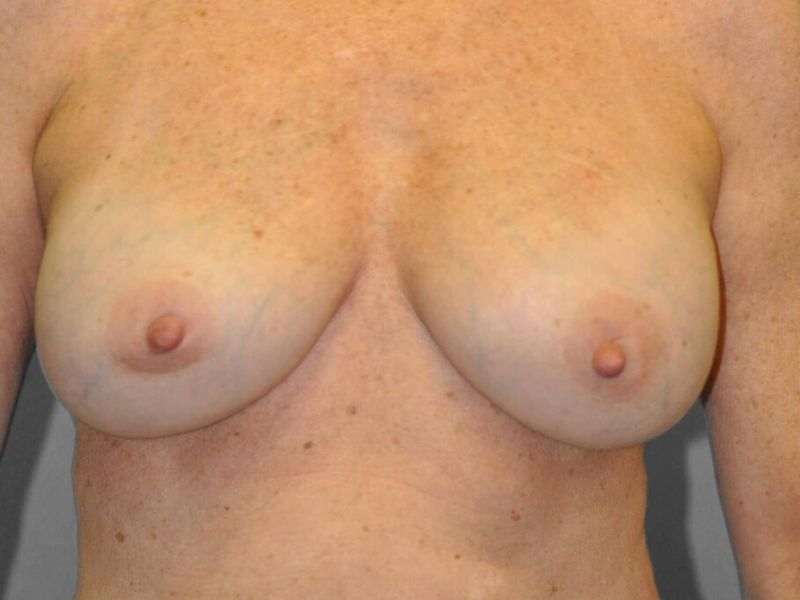
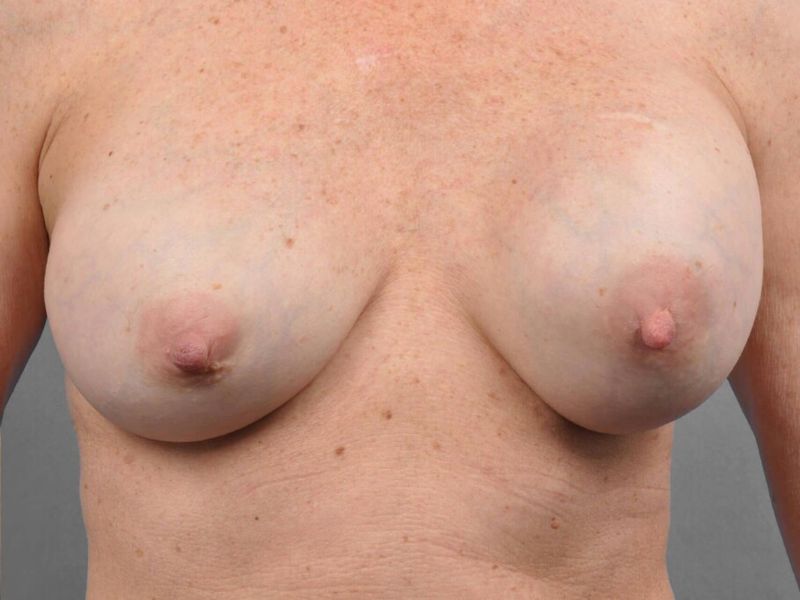
Real cases.
Insurance
Read about coverage & financing →Capsular contracture treatment may be covered by insurance, especially when the original surgery was for reconstruction. Our team pursues authorization on your behalf.
FAQ
Common questions.
How common is capsular contracture?
Capsular contracture is one of the most common complications following breast augmentation, ranging from 2.8% to 20.4%
2
or roughly one in six breast augmentation patients.
3
Is capsular contracture dangerous?
No, capsular contracture is not typically dangerous, but it can cause unsightly surface abnormalities on the breast due to contracting scar tissue squeezing the breast implant. Capsular contracture can pose health risks when the capsule is so tight that it ruptures the breast implant.
4
Does capsular contracture hurt?
In extreme cases, capsular contracture can cause pain in the breasts. Dr. Cassileth uses the Baker scale to rate the severity of capsular contracture. Grades I-III look and feel normal, but grades II and III may feel firmer than a normal breast implant. Grade IV is the most likely to cause pain from constriction, and the breast may appear unnatural in shape.
Can you do anything to prevent capsular contracture?
Patients cannot take preventative measures to avoid capsular contracture; however, some surgical techniques result in fewer instances of developing the condition. For example, implants with subglandular placement are associated with higher instances of capsule contracture.
5
Do I have to remove my implant(s) to correct capsular contracture?
Yes. Capsular contracture can only be cured if your entire capsule is removed. Since the capsule encapsulates the entire implant, the implant is removed with the capsule. Once the capsule is removed from the implant, the implant can be placed back into the breast pocket, but in general, Dr. Cassileth prefers to place brand new implants.
Can you keep capsular contracture from reoccurring?
Traditional methods of correcting capsular contracture often result in recurrence, but Dr. Cassileth has created revision surgery techniques to solve capsular contracture, resulting in a cure rate of over 95%.
Related reading
From the journal.


Sources
Cited research.
- 1Ajdic D, Zoghbi Y, Gerth D, et al., The Relationship of Bacterial Biofilms and Capsular Contracture in Breast Implants. Aesthet Surg J. 2016: 36(3): 297–309
- 2Headon H, Kasem A, Mokbel K. Capsular Contracture after Breast Augmentation: An Update for Clinical Practice. Arch Plast Surg. 2015;42(5):532-543. doi:10.5999/aps.2015.42.5.532
- 3ASPS. What is capsular contracture and how can it be treated? Available: https://www.plasticsurgery.org/news/blog/what-is-capsular-contracture-and-how-can-it-be-treated. plasticsurgery.org · Accessed October 27, 2021
- 4ASPS. What is capsular contracture and how can it be treated? Available: https://www.plasticsurgery.org/news/blog/what-is-capsular-contracture-and-how-can-it-be-treated. plasticsurgery.org · Accessed October 27, 2021
- 5Archives of Plastic Surgery. Capsular Contracture after Breast Augmentation: An Update for Clinical Practice. Available: https://www.ncbi.nlm.nih.gov/pmc/articles/PMC4579163/. ncbi.nlm.nih.gov · Accessed October 27, 2021
Ready to discuss capsular contracture treatment?
Schedule a consultation with Dr. Cassileth and her team to explore your options.
Request a consultation